

Assumptions...How to Respond
By Coach D. Jackson | Watering The Seed
"Everyone should be quick to listen, slow to speak and slow to become angry." James 1:19
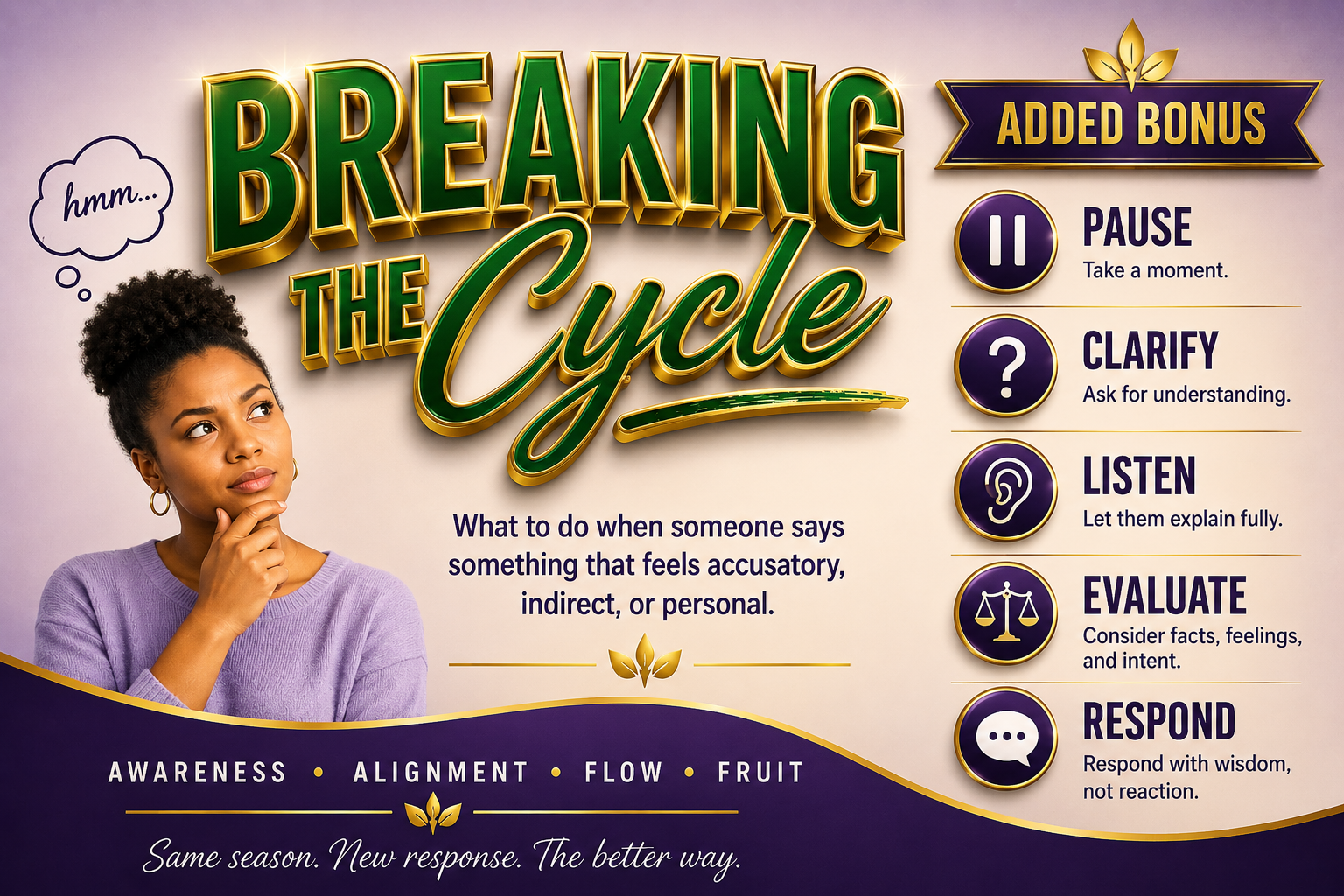
In part 1 of Breaking The Cycle, I kept going back to the topic of communication...when someone says something that feels accusatory, or them making an assumption in reference to you; how to handle a situation like that.
I explained that for me...the first reaction is to ask "if they are referring to me"? To get clear about it. And this is really important because it's less about communication skills and more about emotional discernment.
In a situation like this, the One thing I've noticed is that many people believe they only have two choices:
- Ignore it. Or...
- Confront it immediately.
But...There's actually a lot of healthy ground in between.
The goal isn't to prove you're innocent.
The goal is to understand what is actually being communicated before you respond.
So, here are some approaches to help you get through this...depending on the situation...of course.
- Seek Clarification Instead of Assuming
Your instinct to ask, "Are you referring to me?" isn't wrong. It's direct and can prevent misunderstandings.
Sometimes, though, a slightly softer question lowers defensiveness.
Instead of:
"Are you talking about me?"
Try:
"Can I ask for clarification? Were you referring to me when you said that?"
Or:
"I want to make sure I'm understanding correctly. Was that directed toward me?"
These questions communicate curiosity rather than accusation.
- Slow the Conversation Down
When we feel accused, our nervous system often wants an immediate answer.
But you don't have to respond instantly.
You can simply say:
"Help me understand what you mean."
That's one of the most powerful communication phrases there is.
People often reveal much more when they're asked to explain themselves.
- Separate Facts from Feelings
Ask yourself three questions before responding:
- What was actually said?
- What am I assuming they meant?
- What evidence do I have for that assumption?
Those are rarely the same thing.
For example:
Fact:
"They said, 'Some people don't follow through.'"
Feeling:
"I felt like they were talking about me."
Assumption:
"They must think I'm unreliable."
Those are three different things.
- Don't Volunteer for an Accusation
Sometimes people speak generally.
Sometimes they speak indirectly.
Sometimes they intentionally want someone else to identify themselves.
If you immediately say,
"Are you talking about me?"
you may unintentionally step into something that wasn't yours.
Instead, try:
"Can you tell me who or what you're referring to?"
Now they have to be clear.
- Ask Yourself Why It Landed So Hard
And this is the Watering The Seed question to bring you healing.
Sometimes a comment hurts because it's unfair.
Sometimes it hurts because it touches an old wound.
Ask yourself:
"Why did that statement affect me so deeply?"
The answer may have nothing to do with the other person.
- Respond, Don't Defend
If it does turn out they were referring to you...
Don't immediately defend yourself.
Try understanding first.
For example:
"I'd like to understand your perspective before I respond."
Or:
"Can you give me an example of what you mean?"
People often make broad statements that become much more manageable when they're asked for specifics.
- Recognize Indirect Communication
Some people don't address issues directly.
They'll make comments like:
"Some people just don't care."
Or...
"It's funny how people change."
Instead of taking the bait, ask calmly:
"Is there something specific you'd like to discuss with me?"
That gently invites honesty without escalating the conversation.
- Give Yourself Permission Not to Own Everything
This is huge.
Not every uncomfortable statement belongs to you.
One of my favorite reminders is:
Not every message that passes by your door is addressed to your house.
Sometimes we're so accustomed to self-examination that we assume every criticism is ours to carry.
It isn't.
A Watering The Seed Perspective
When someone makes an ambiguous statement, there's a cycle that can happen in seconds:
Comment → Assumption → Emotion → Reaction
But what if you interrupted it?
Instead of:
"They're talking about me."
You pause and ask:
"What do I actually know right now?"
That tiny pause is the interruption.
Scripture Offers Wisdom Here
One passage that comes to mind is James 1:19:
"Everyone should be quick to listen, slow to speak and slow to become angry."
Notice the order.
Listen first.
Speak second.
React last.
That order alone can prevent countless misunderstandings.
A Practical Communication Framework
The next time something feels accusatory, walk through these five steps:
- Pause – Don't respond from the first emotion.
- Clarify – "Can you help me understand what you meant?"
- Listen – Let them explain without interrupting.
- Evaluate – Is this fact, perception, misunderstanding, or projection?
- Respond – Address only what was actually communicated, not what you feared was communicated.
The Watering The Seed Flow Framework
Whenever life brings another season, walk through these four steps.
Awareness
Recognize the season you're in.
Ask yourself:
"What is The Divine inviting me to learn here?"
Instead of:
"Why is this happening again?"
Alignment
Return to The Divine's truth.
Ask:
"What does The Divine's Word say?"
Not:
"What does fear say?" Or: "What does my past say?"
Flow
Choose intentional responses over automatic reactions.
Move with The Divine's wisdom instead of your survival instincts.
Fruit
Watch what begins to grow.
Peace.
Patience.
Wisdom.
Joy.
Self-control.
Confidence.
Love.
Not because life stopped happening...
But because your roots grew deeper.
Reflection Questions
- What thought pattern do I need to surrender to God?
- How has He already transformed the way I respond compared to a year ago?
Closing Affirmation
I am not bound to old reactions. I pause, seek clarity, listen with wisdom, and respond from truth. When familiar situations return, I show up renewed, aligned, and at peace.
Reflection: The season isn't your enemy...Your automatic response may be. Every pause is an opportunity to choose alignment over autopilot. Because empowerment doesn't come from escaping life's rhythms. It comes from allowing The Divine to transform the way we walk through them.
If this post speaks to you, share it with someone who needs to know that they are allowed to choose relationships that pour back.
Listen to the full podcast episode: EP.35/ BONUS and ADDED BONUS Breaking the Cycle "When the Cycle Returns" on Spotify, Amazon Music & YouTube Because realizing that being needed is not the same as being valued.
And... tune in to Watering The Seed podcast for more real conversations about healing, alignment, and breaking free.
Drop a comment: “If you've had a conversation where your first interpretation wasn't based on the present conversation—but instead on a past experience."
DONATE Download, and Tune In Now...Podcast Episode: EP.35/ ADDED BONUS Not Communication, Emotional Discernment
Add comment
Comments